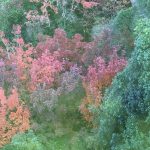
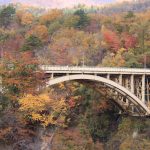
On the next morning, we visited the Momijidani Park and Daisho-in before leaving Miyajima. Wild deers were roaming freely in the Park. Though koyo has passed peak, it was still nice. Koyo was still in peak in Daisho-in. It was serene when the day trippers have not arrived yet.
From Momijidani Park to Daisho-in
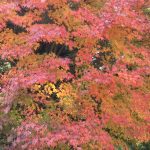
Koyo was slightly past peak in park
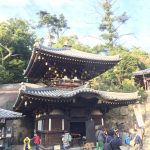
on the way to Daisho-in
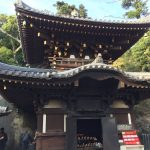
Daisho-in entrance
Koyo was reminiscent of Eikando in Kyoto
on the back of Hondo
Senjokaku and Pagoda
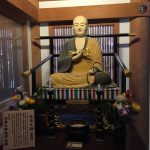
cool monk statues 🙂
Torii Gate – night and day
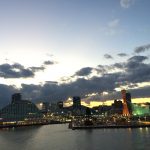
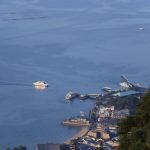
As we had visited the Itsukushima Shrine less than one year ago, we gave it a pass. I strolled around after dinner and reached the Torii Gate viewpoint in less than 15 min. It was nice to see it illuminated. By the time I was about to return, a small passenger cruise was sailing through the Gate.
By the time we checked out early drizzles had turned into rain. It continued when we were on Shinkansen in Hiroshima. Returned to Kyoto after lunch and checked into hotel on top of Kyoto station.
Visited Kansai for 1 week in late Nov for peak koyo in Miyajima, Kyoto and around Biwako.
Right after landing in KIX, we headed to an onsen resort in Kobe to relax. It was our second stay.
Kobe harbour views from our room balcony – dusk till dawn.
views taken from room balcony
Miyajima
Right after checkout, we headed to Miyajima by Sanyo Shinkansen, local commuter train and ferry. Went for lunch before taking ropeway to Mt Misen.
Unagi-don
grilled oyster
on the way to ropeway station
views from the ropeway
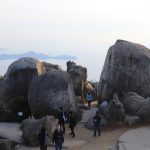
Mt Misen
It took nearly an hour to queue up for the ropeway – guess it was due to koyo season. By the time we reached the top station it was almost 3pm. Started hiking up to summit but first we had to descend before ascending. Reached summit at around 4pm, rested for a while and commenced the return.Stopped by Misen Hondo and the eternal flame along the descent. Queued for the ropeway again for almost an hour and watched sunset over Mt Misen while waiting. By the time we arrived back at the base station it was completely dark. Returned to our onsen hotel nearby.
Our second stay in this historical onsen ryokan of several centuries in Akiu onsen before leaving Japan.
It used to be visited by the famous Date Masamune (伊達政宗) – the Sendai Shogun more than 400 years ago, and subsequently his succeeding shoguns. Since the Edo-era, the Sato family has been appointed to administer the Akiu onsen.
It was the venue of the Finance Ministers and Central Bank Governors’ meeting during the G7 summit in 2016.
Stayed in this historical onsen ryokan (of more than 200 years old) in Yudanaka onsen for 2 nights. Its Momoyama rotenburo is registered as national tangible cultural asset (登録有形文化財).
Momoyama rotenburo
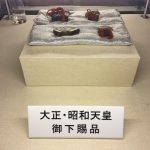
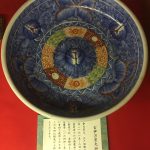
Pottery from Edo-era from Imari, Kyushu
ilyama Shogun received a macha bowl from Tokugawa shogun
Though this onsen hotel has been around for several decades, its rooms and other facilities have been refurbished in western style.
As it’s at 1000m along the slope of Mt Myoko, sea of clouds can be seen in the morning on clear days from hotel rooms, decks and restaurants etc.
Apart from traditional Japanese courses, it has a French restaurant serving French dinner courses and western-style breakfast. We selected the latter and both meals were sumptuous and delicious.
room with nice views
American breakfast
Sea of clouds
Having been in continuous rainy days in this trip so far, we were lucky to have a sunny day and sea of clouds early in the morning, seen from room and public deck.
Our original plan was to visit Naruko gorge and a boat ride along Mogamigawa as we last did in 2001. However, due to typhoon 22 – second in a row in 2 weeks, we dropped the latter due to rain and strong wind.
From Tokyo, we took Shinkansen to Sendai and picked up a car. Rain was pouring on the way while driving to Naruko Gorge. We did not visit anywhere until the next morning when it cleared.
Naruko Gorge (鳴子峡)
Our 3rd visit but first time by car. Though koyo has past peak as expected in end October, it was still great. Followed the trail down to the bottom of gorge and returned. Back in 2001 we carried on another 4km for some gorgeous koyo down there, but ever since the big Tohoku earthquake in 2011 that section has been closed.
bottom of the gorge where the full trail was closed
local train entering a tunnel in the gorge
From the parking area, we followed another trail for an easy 1-hour walk.
Afterwards, we had to return to Sendai area to check into another historical onsen ryokan in Akiu onsen.
After checking out the next morning, we drove back to Sendai station, returned car, Shinkansen back to Tokyo and left Japan, thereby ending this koyo trip in Tohoku and JP Alps.
views from hotel room shortly before sunset and sunrise. For more views of sea of clouds, refer to the link above.
views from room shortly before sunset
views from room shortly after sunrise
public deck
After checking out from hotel on the next morning, we took the Sky cable car to 1300m. It was another rare sunny day in this trip. We had some nice views up there. Afterwards, we drove to nearby onsen towns for two other waterfalls – the Sou-taki and Budou-taki.
Sky cable to 1300m
view from top station
Nojiri-ko in the distance with sea of clouds
Sou-taki
budou-taki
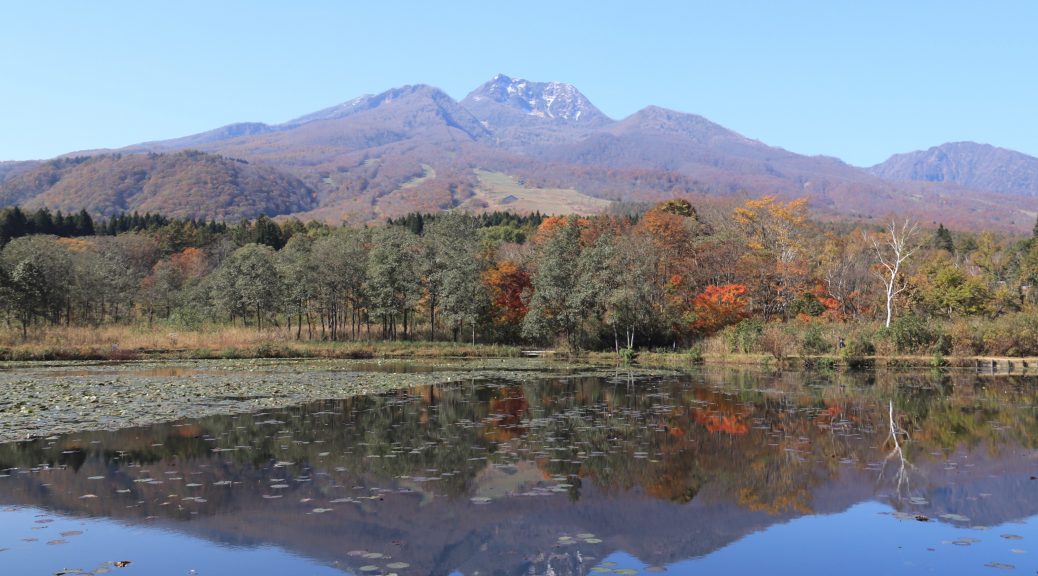
Imori-ike (いもり池)
Beautiful pond with reflection of Mt Myoko as in featured photo. We then headed to Nagano city, visited Zenkoji, returned car and headed back to Tokyo for weekend.
We next stayed in a renowned historical onsen ryokan in Yudanaka onsen for 2 nights. While the local weather forecast had predicted a sunny day in Nagano Prefecture, rain clouds rolled in not long after our breakfast and we had to embrace for another rainy day again 🙁
Despite this, we had some nice surprises for the day when we visited Matsukawa river valley for the first time ! Apart from peak koyo, we bumped into two waterfalls that were not on our radar screen.
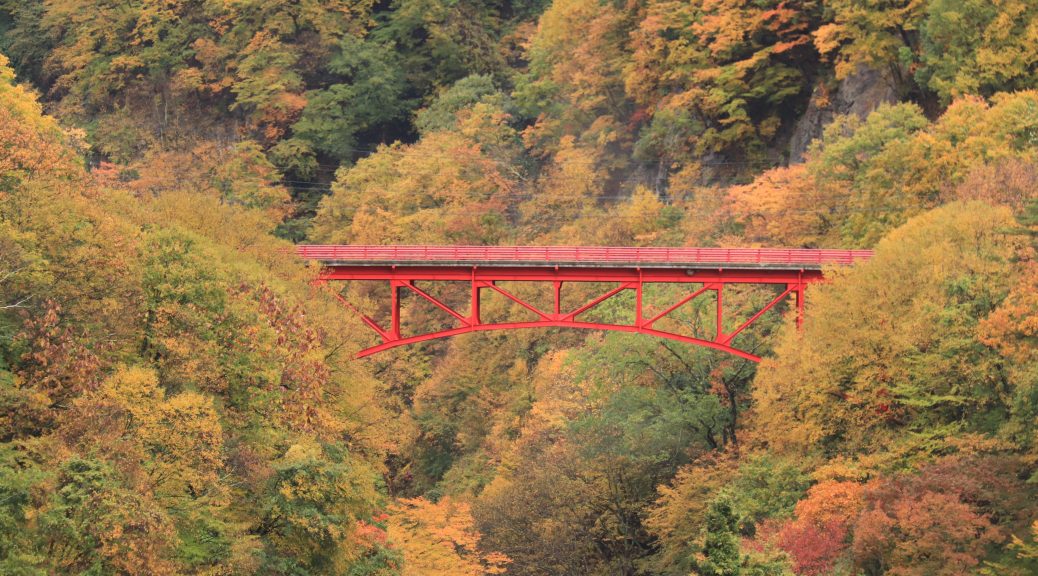
Takai-bashi
Ya-taki (eight fall)
Kaminari-daki (thunder fall)
Walking behind a waterfall for the first time – the Kaminari-daki (Thunder fall) !!
Yonako falls – top 100 waterfalls in Japan (日本の滝百選米子大瀑布)
On the next morning after checkout, we drove to Yonako falls in Suzaka city.
The car park was at 1300m, after 10km of narrow and winding mountain road from Suzaka city. From there, we hiked another 180m uphill to the observatory in about 30min. Though koyo has past peak on the cliffs, it was still stunning.
Given this was our 5th visit we had deliberately booked a ryokan with room facing the Mt Hotaka range for 2 nights. Our original plan was to follow the walking trails to Tokuzawa or maybe Yoko-o as day trip and to buffer for any adverse weather conditions.
It turned out the plan did cater for the latter case only. On the afternoon when we arrived heavy rain and strong wind was ravaging and getting dark. Thus, we did not venture to go anywhere after checking into our ryokan beside Kappa-bashi (bridge). On the next day wind subsided a bit though rain had been persistent. Rain clouds and mists simply obscured almost all the summits – not even the closer Mt Yakedake can be seen 🙁 We only walked the smaller loop between Kappa-bashi and Tashiro-bashi, while the trail heading to Taisho-ike was closed due to flooding.
Kamikochi in rainstorm
D1 – Kamikochi in rainstorm
macaques feeding themselves in rain
Kappa-bashi
even Kappa had to wait
Luckily, the sky cleared up (after typhoon Lan and its rainbands had passed by Japan) upon daybreak prior to our departure, with snow-covered Mt Hotaka range in the background, layered bands of koyo and almost perfect reflections from Taisho-ike !
At last, mother nature and Kamikochi were kind to all visitors in showing off her grandeur. When we arrived at the Taisho-ike observatory point around 8am, there were already a dozen of photographers focusing on the same target after the rainstorms had finally dispersed 🙂
Kamikochi in grandeur
view from room at dawn
Mt Hotaka range @3000m
view outside ryokan before 8am
at Taisho-ike at 8am
Mt Yakedake @2400m
Summit of Yakedake
at Tashiro-ike
Tashiro-ike
at Tashiro-bashi
Mt Roppyakusan
From Kamikochi to Yudanaka onsen via Matsumoto
While we were on the Alpico bus returning to Shin-shimashima, we wondered where the beautiful Mandarina ducks have gone. They were either swimming in Taisho-ike or moving precariously along the river banks during our past four visits. Meanwhile, there were heavy cranes and other machines operating at the far end of Taisho-ike close to the entrance. Hopefully, those lovely birds are still living happily in this closest paradise on Earth.
During the descent, there were gorgeous koyo on either side of the mountains/slopes. After arriving at Matsumoto, we picked up a car and dropped by Matsumoto Castle again.
We then visited Obuse – a small garden town less than 1 hour from Nagano city. As it was the harvesting season of chestnuts, there were plenty of those products for sale.