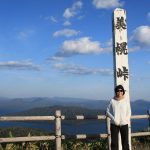
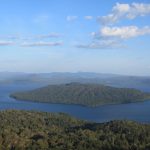
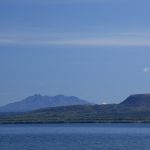
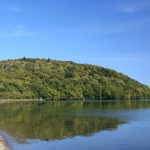
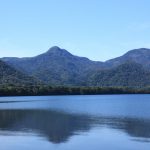
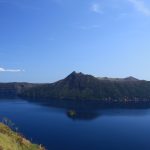
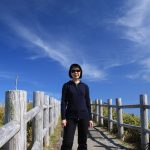
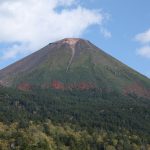
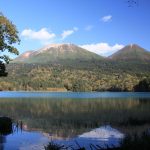
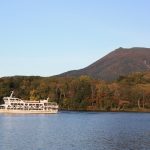
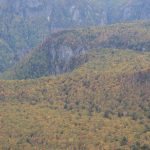
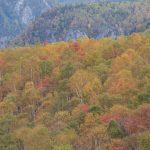
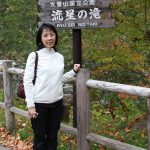
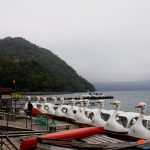
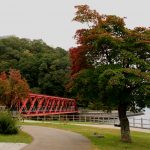
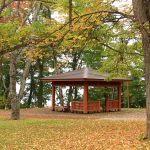
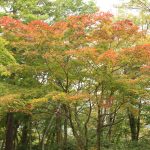
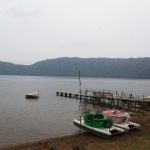
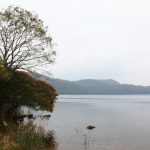
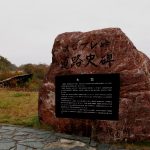
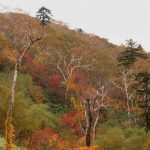
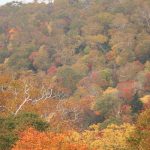
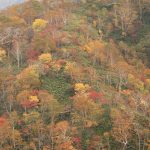
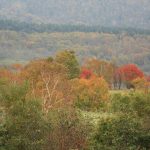
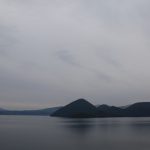
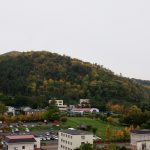
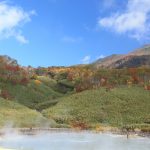
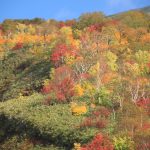
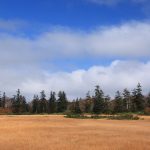
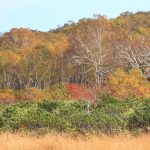
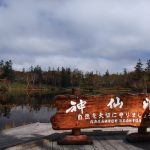
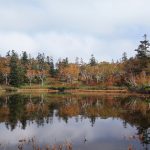
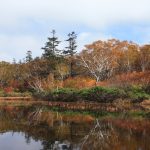
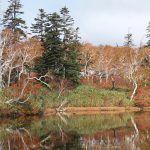
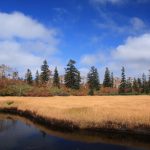
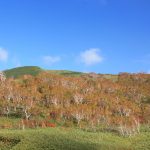
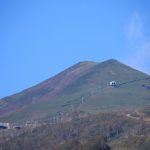
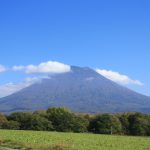
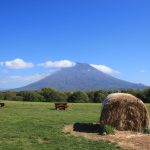
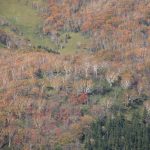
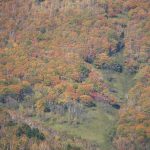
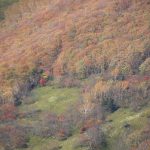
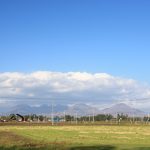
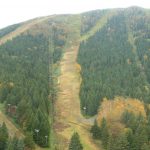
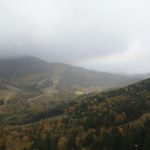
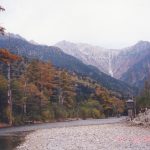
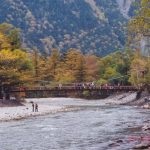
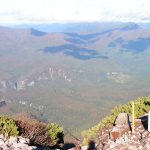
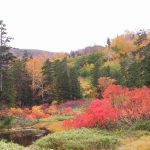
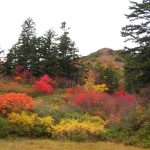
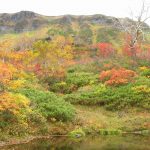
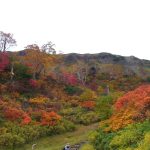
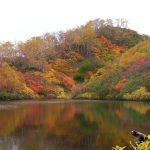
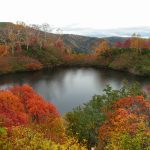
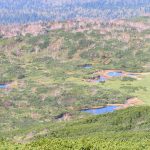
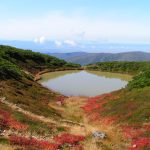
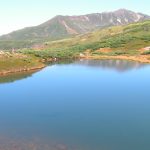
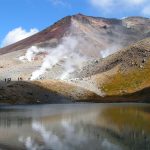
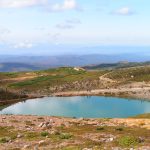
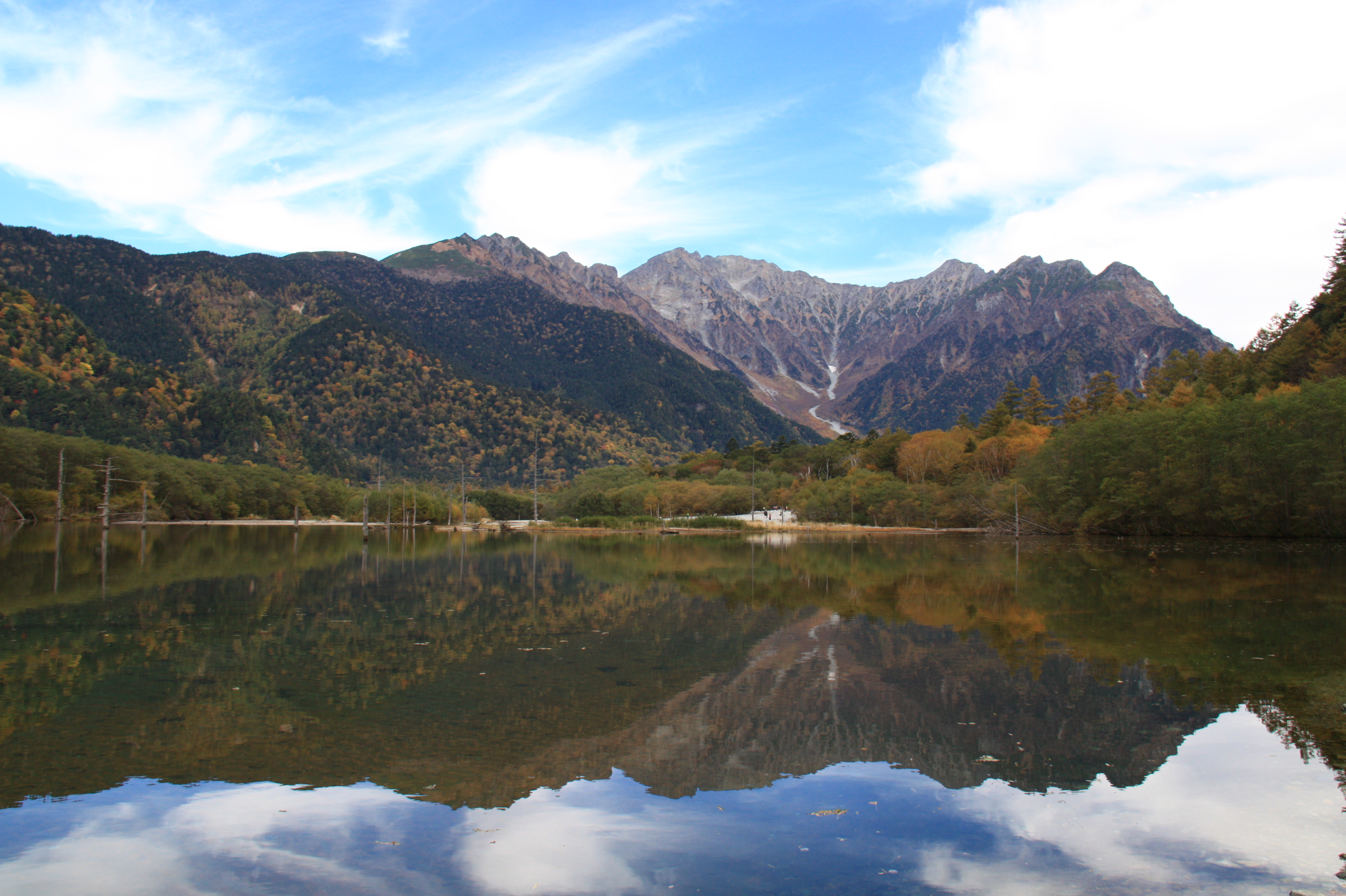
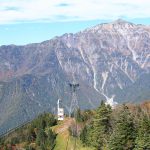
3rd visit to these 2 lakes we like most in Hokkaido East. We followed our last driving trip in 2006. So glad when we were back in Mashu-ko blue sky and deep blue lake was awaiting us.
view of Kussharo-ko from Bihoro-toge
Wakoto peninsula
Mashu-ko
Onneto & Akan-ko ( オンネトー > 阿寒湖)
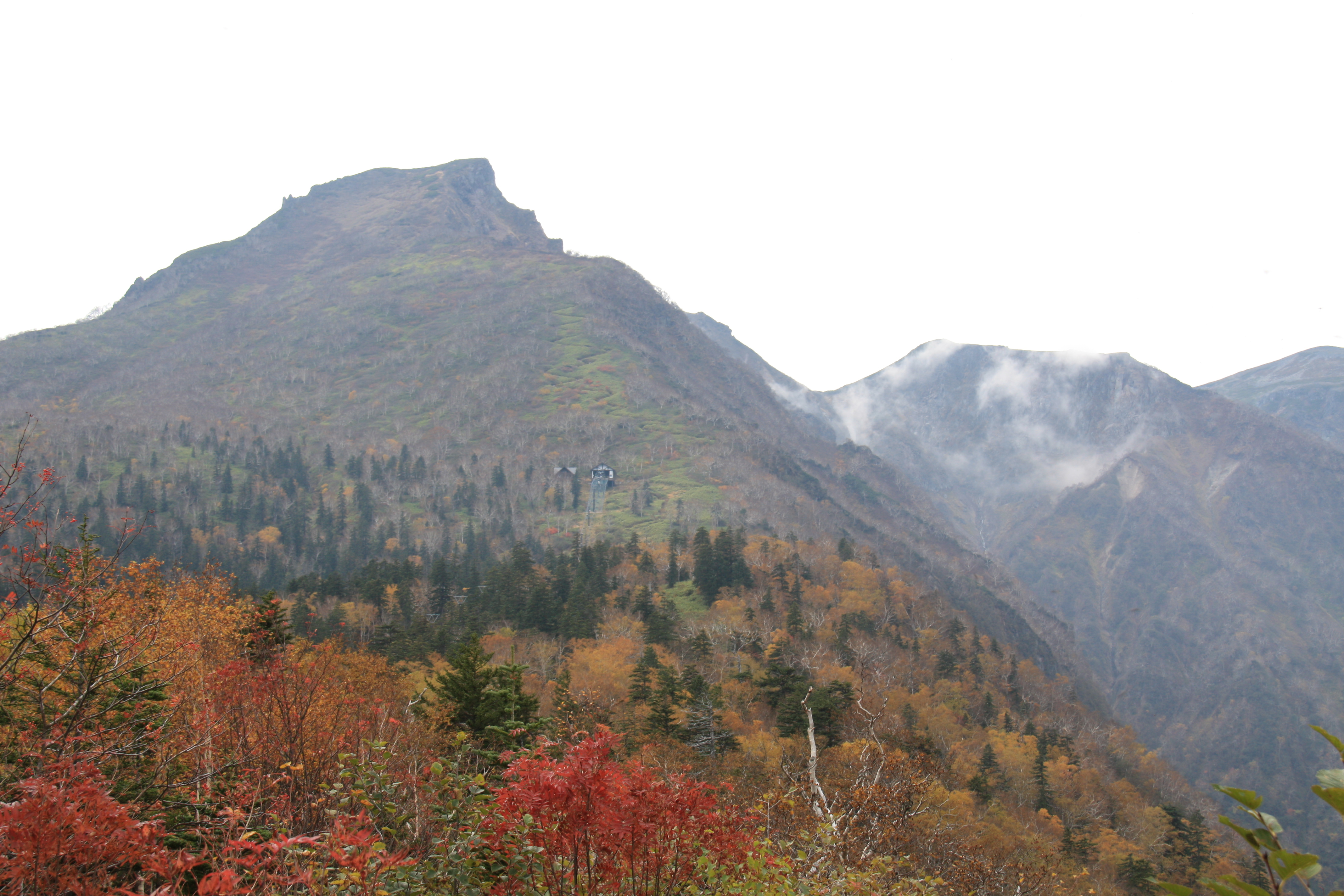
Visited Onneto, a small lake uphill from Akan-ko. Lake was in amazing turquoise with reflections of Mt Me-Akan (Ms Akan), and a bit of fall foliage. Stayed in luxurious Hinoza in Akan-ko, a standalone annex to Tsuruga onsen hotel (see ONSEN page).
Mt Me-Akan from Onneto
Akan-ko
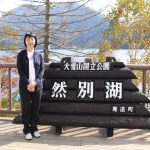
Tokachigawa > Shikaribetsu-ko (十勝川 > 然別湖)
From Akan-ko we drove to Tokachigawa for our favourite onsen in Hokkaido. On next day, we drove to Furano, stopping by Shikaribetsu-ko, where there were some fall colours already.
Returned to Hokkaido for a 10-day trip from late Sep to early October by car. This was to time for peak fall foliage in places like Sounkyo, Notoro-ko, Mt Tokachi, Teninkyo and Asahidake etc.
Daisetsuzan/Sounkyo ( 大雪山/層雲峽)
Took JR express train to Asahikawa straight from New Chitose airport. Next morning picked up rental car and arrived at Sounkyo around noon. Took Kurodake ropeway to 5th level @1500m. As peak fall foliage had descended to top of Sounkyo valley, we did not go further up to 7th level as the views from ropeway was nice enough.
View of Kurodake
view of Sounkyo and beyond
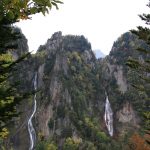
Ryuse-no-taki, Ginga-no-taki
strolling along the Koyo-valley
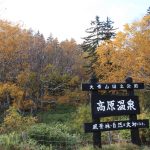
Kogen onsen
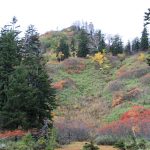
2nd visit since 2004. Though we came a few days later (than in 2004) the fall colours in the numa clearly faded compared to last time. Besides, there were fewer visitors than last time, which was another indication that the peak had passed. Anyway, we hiked back to Takimi-numa and when we reached Midori-numa, the park rangers told us to return as the trails further up were flooded due to recent rain. Maybe this was a consolation peak colours had descended to the entrance gate level @1300m.
We will be back !!
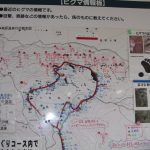
visiting centre with map of past bear footprints
Takimi-numa – colours had faded
same in Midori-numa
Kogen onsen entrance
around Daisetu dam – downhill from Kogen onsen
Abashiri/Notoro-ko
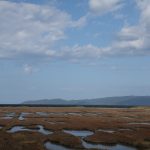
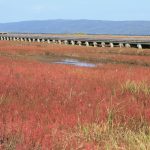
Drove to Notoro-ko near Abashiri for Sangoso (coral grass). From mid to late Sep the coral grass would turn from brown to red. It is a swamp and we were there probably after peak but still had a good glimpse.
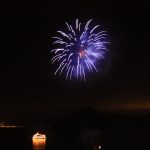
Drove to Toya-ko via Orofure Pass. Surprise !! Peak fall foliage was on the slopes. Continued onto Toya-ko for our 5th stay in onsen ryokan. Fireworks after dinner and a serene lakeview outside our room.
Koyo at Orofure Pass
serene lakeview from room
Niseko (ニセコ)
Visited Niseko 2nd time for fall foliage. We arrived 1 week earlier than in 2008. This time peak fall foliage was in Oyunuma and Shinsen-numa. We went on to stay in an onsen ryokan in Niseko Annupuri.
From Otaru, drove to Tokachigawa onsen to stay in our favourite ryokan for 3rd time. Visited Nissho-toge but foliage was fading. Lunch in a nearby farmhouse.
View from Tokachigawa onsen hotel
Nissho Pass
local farm house in Tokachi
Tomamu (トマム)
Stayed in this resort before heading to the airport. One of the highlights there was to watch sea of clouds on its observatory @1000m in early morning. Each day, if their forecast is positive then reservation is required for transports to shuttle bus, cable car at around 4am the next morning. We did not intend to go as we had seen it before in the Alpine route. Besides, the forecast on that day was negative. So all guests could have a good sleep.
2nd visit in mid Oct to witness the fall foliage there for the first time. Been mesmerized by its pristine nature ever since.
view from Taisho-ike
view from Tashiro-ike
Kappa bridge
Naruko (鳴子峡) and Mogamigawa (最上川)
1st visit to both in Yamagata, Tohoku. Took a 1hr boat ride downstream in Mogamigawa in peak fall colours. Returned to Tokyo by Tsubasa Shinkansen from Shinjo.
Nikko (日光)
2nd visit to witness peak fall foliage there for the first time. Took the lake cruise in Chuzenji-ko up on 1300m. Temp was below 10C with freezing cold wind chill on cruise.
Mt Nantai
Kegon falls
Kusatsu onsen (草津温泉)
visited the public Sainokawara Rotenburo. It was just huge – could eaily accommodate more than 100 ppl. While onsen was in turquoise, fall colours overhead was beautiful as a bonus 🙂
In the centre of the onsen town, 4000 litres of onsen flow per min !
Visited the followings in early and late Oct for koyo.
Hakuba
visited Tsugaike Kogen in early Oct. Did not complete the loop due to misty day. Returned to stay in Hakuba Wadano for overnight onsen. The 3 summits of Shirouma-dake were already covered in snow.
Tsugaike kogen in early Oct
Hakuba Wadano in late Oct
Mt Shirouma covered in snow – viewed Hakuba Happo
The Alpine route
Visited the Alpine route for the 1st time on public holiday from Hakuba. Due to huge crowd and long queue up to Daikanbo via ropeway, had to abandon that ride and return back to Tokyo via Ogizawa.
view of Mt Tateyama from Kurobe-daira @1800m
Naruko gorge
2nd visit. Finished walking trail at the bottom of the gorge which took about 1hr. Returned back to onsen town for quick lunch and daytime onsen before returning to Sendai.
Goshiki-numa (5-coloured ponds)
Prior to going for the walking trail takes about 1 hour, we took a lake cruise of Hibara-ko when it’s in peak colours. Of the ponds there we like these more – Yagi-numa, Ao-numa, Ruri-numa and Bishamon-numa.
Hibara-ko
lake cruise in Hibara-ko
Yagi-numa at the upper entrance
Aonuma
Ruri-numa
Mt Bandai from Ruri-numa
Benten-numa
Bishamon-numa
Nikko
Took the lake cruise where the most stunning foliage were.
our 1st trip to Hokkaido for fall foliage. We went to Daisetsuzan (大雪山) in late September during peak foliage 🙂
Kurodake (黑岳)
took Sounkyo ropeway and ski lifts to 7th level @1500m and commenced hiking to summit. Took about 1.5hr to reach summit @1984m. All are required to register at 7th level before hiking.
serious hiking required! During peak foliage season, no private car was allowed and all had to park their cars in a temporary parking area near Daisetsu-lake and change to special shuttle bus uphill to base @1300m. Before entering the park we had to listen to a briefing of the route, wild bear precautions, closing time etc. 1 round trip takes 4 to 5 hours, with only 1 or 2 makeshift toilets. There were lots of ups-and-downs and muddy paths along the way. Reaching the 1st pond took 1hr.
The most stunning ponds are Takimi-numa, Midori-numa, Ezo-numa, Kamo-numa etc. We did not finish the loop as by 1500 all are required to leave the park. By 1300 we arrived at Daigaku-numa, had a quick bite and turned back along the same route.
This is still one of most memorable foliage trip so far – the closest place to heaven !!
Asahidake is the highest peak in Hokkaido @2200m+. Took ropeway to top station @1600m where there were several hiking trails. Took the 1hr trekking course. The reflection of Asahidake in the Sugatami pond (姿見の池 ) was pristine. While fall foliage was fading up there, the forest between 1100 – 1600m was starting to turn into yellow.
Kamikochi @1400m is another favourite ‘koyo’ spot for us. We first visited in Nov 1999 when most foliage passed peak and were mostly brownish, with many leaves on the ground. We returned twice in different months – once in May and another trip in Oct. In 2010 we returned for the 4th time, hoping to catch fall colours at its peak. Turned out to be about 70% at eye level, where on the mountain slopes there were some patches of red and yellow.
We arrived early in the morning to start our trekking from Taisho-ike. The pond was almost still and serene. With almost perfect reflections of the Mt Hotaka range, Mt Yaki etc in the water, we were so pleased with Kamikochi as the finale of this koyo trip.
The Shin-Hotaka ropeway is a double-decker, stretching from 1100m up to 2100m. At the top observatory, a panoramic view of the JP Alps can be seen, with summits ranging from 2400m – 3100m like Mt Nishi-Hotaka, Mt Yari, Mt Kasa, Mt Yake etc.
Overall itin – Tokyo > The Alpine route (East to West) > Kurobe Gorge > Shin-hotaka > Kamikochi > Tokyo
The Tateyama-Kurobe Alpine route is the one of the most spectacular during fall foliage season. It descends from Murodo side from 2700m+ from mid September.
We visited in mid-Oct when peak fall foliage descended to about 1800-2200m. We took a “East-to-West” route, commencing from Ogizawa (on Nagano side) and exit in Tateyama (on Toyama side). We stayed in Omachi onsen-go the night before. While no car is allowed, all have to take 6 different types of transports within this route. Even though it was on a normal day, there were loads of tourists so we had to queue up between 5 to 20min.
From Ogizawa @1400m to Daikanbo @2300m (Nagano side)
The most beautiful fall foliage was between Kurobe-daira @1850m to Daikanbo. While we were walking across the Kurobe dam @1400m, water was released from the Kurobe lake. The ride on the ropeway was the highlight, where we were in a sea of colourful foliage.
Ogizawa station @1400m
water being released from Kurobe dam @12 noon
Lake Kurobe
queueing for cable car up to Kurobe-daira
Kurobe-daira @1800m
Mt Tateyama @3000m+ viewed from Kurobe-daira @1800m
view of Mt Tateyama @3000m+ from Kurobe-daira @1800m
ropeway to Daikanbo
on ropeway upto Daikanbo @2300m
view from Daikanbo
Murodo @2450m to Tateyama (Toyama side)
Once arrived at Murodo, we had a quick bite and took a walking trail of about 1hr. Fall foliage up there had passed its peak in the ponds such as Mikuriga-ike, however, we were lucky to have spotted some rare birds – Thunderbird (Raicho). We stayed in the Tateyama hotel – probably the highest hotel in Japan. Chose a French course and surprisingly it was better than expected, including its service. The next morning when we woke up we were literally above a sea of clouds. Thus, before descending we took a quick stroll along the walking trail to take advantage of clear blue sky and reflections in the ponds. Took the only highland bus, descended to Midagahara @1900m and did some trekking there for some fall foliage, though the peak had passed as well. On the way down from the bus, we passed Kobo probably @1600m and the colours were at peak! Next, we descended to Bijodaira @1100m where there were some huge Sugi trees. As it was turning late and it was well below the foliage zone, we decided to skip it and exit the Alpine route – we still had to travel to Unazuki onsen for overnight stay.
Murodo @2450m
sea of clouds in the morning from hotel room
Murodo-daira with Mt Tateyama in the background
Hotel Tateyama in Murodo
descended to Midagahara @1900m by bus
followed walking trails there
Bijyodaira station @1100m
took cable car descending to Tateyama station
Exiting the Alpine route in Tateyama station in the west
1st time staying in a pension. Owners were extremely cordial. Had dinner with their parents on one night. On our last dinner a deer hunted by them was grilled in the fireplace.
top of Appi
Mt Appi viewed from train
Pork shabu-shabu dinner
pension owners
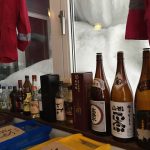
all you can drink – sake, whiskey, beer etc 🙂
deep snow everywhere
Yamagata Zao – 2 day ski
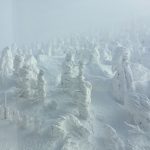
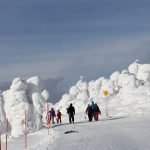
After skiing in Appi for 2 days, went to Yamagata Zao for another 2 days for the 1st time. Had known about these tree monsters (Juhyo) before, but it was really captivating being surrounded by thousands of them. The whole scene was surreal as if we were on another planet!
Juhyo on either side of ski course
numerous of these extending uphill
view from gondolda
view from top observation deck @1600m
close encounter @1600m outside Jizosancho station
top of ski course @1600m
Kaiseki dinner in onsen ryokan
Zao onsen opened for 1900 years, as stated in poster
Juhyo may or may not be seen even in close range, much depending on weather condition. When the mt top is shrouded in mists/clouds, nothing can be seen. A local senior couple whom we met in the onsen ryokan for dinner went up there w/o seeing anything. We were lucky to catch a glimpse of them when the mists suddenly cleared up for about 30min when we were having a late lunch up there.