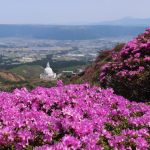
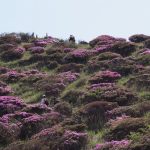
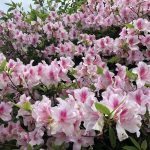
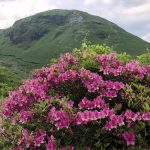
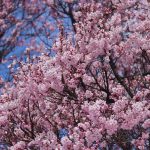
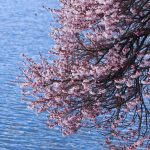
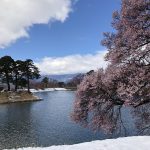
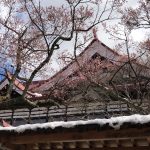
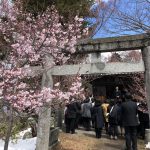
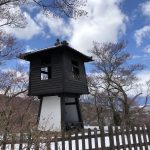
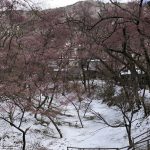
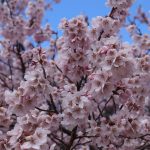
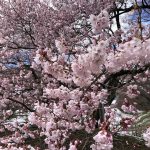
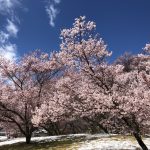
Before leaving Mt Aso after staying for 2 nights, visited Sensuikyo for Miyama-Kirishima (mountain azalea).
Sensuikyo (仙酔峡)
Luckily, the road leading up to Sensuikyo has re-opened from April (after being closed since the last earthquake in 2016). The pink Miyama-Kirishima was almost in full bloom on the slopes. We left less than an hour later, when more cars were waiting to be allowed into the parking lot.
Kuju Flower Park
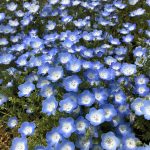
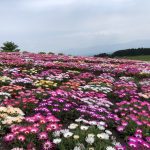
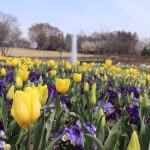
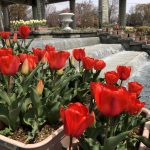
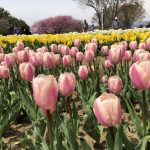
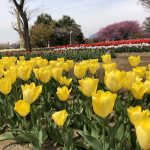
Arrived at the flower park around noon. Had casual lunch then visited various colourful flower fields. There were live music performances close to the entrance on that Sunday which attracted many visitors.
The park was huge and we spent roughly 2 hours there. By the time we left rain clouds started rolling in. Though it was quite crowded (as expected), the park was beautiful with spring flowers and the Kuju mountain range as backdrop.
tulips
Nemophila with Mt Kuju as backdrop
Temari
Poppy field
Daisy fields
Last glimpses of Mt Aso before heading to Kurokawa onsen
Visited Mt Aso in mid-May for new lush green in Kusasenri, along the rim of the giant ancient caldera, and Azaleas. Stayed in onsen hotel for 2 nights (Aso Uchinomaki onsen), fairly close to sightseeing spots in Aso by car.
Though the volcanic level has been raised to level 2 since April, the road up to the Mt Aso ropeway station was open, though ropeway and road further uphill to the crater were closed.
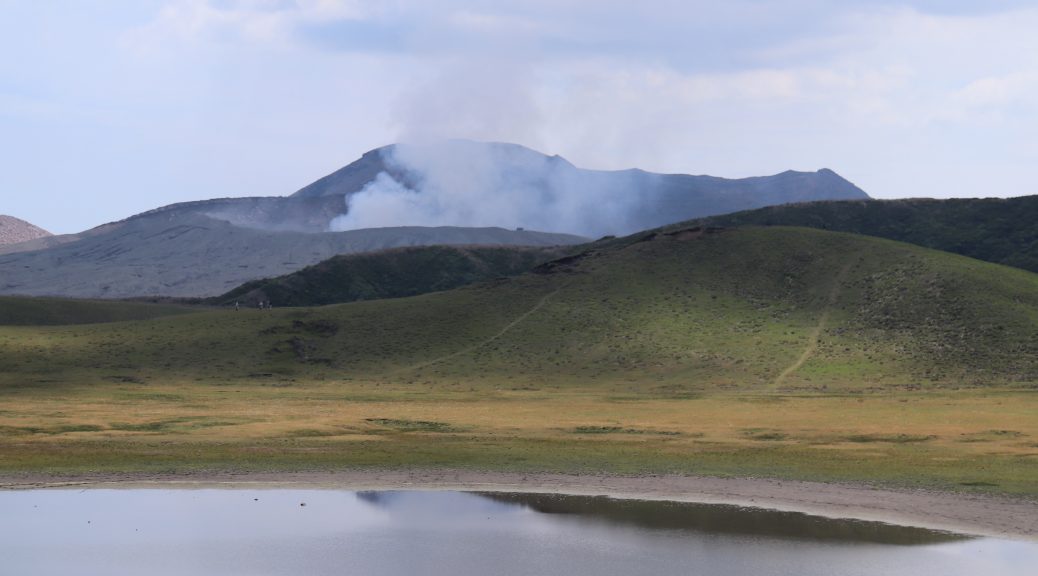
The white fumes rising from Nakadake (Central summit) was quite mild, compared to the black smoke and volcanic ash in Sakurajima (Kagoshima) when we visited in March 2018.
Nakadake from Kusasenri
Eboshi over Kusasenri
Kishima
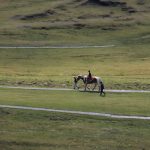
horse riding in Kusasenri
a small colony of Miyama-Kirishima blooming
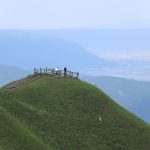
Komezuka, Nekodake and lush green scenery from observatory decks along the northwestern rim of the ancient caldera along Milk Road.
Komezuka
Azaleas in full bloom in Mount of Longevity garden (長寿ヶ丘公苑のつつじ)
After staying in Kumamoto for 2 nights, picked up rental car and headed eastward to Takachiho (in Miyasaki Prefecture).
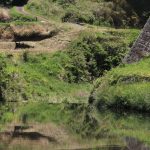
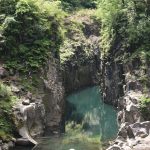
Dropped by Goroga-taki (height of 50m) and Tsujunkyo (bridge) along the way. As the latter was under repair no access was allowed. Otherwise, water would have been spilling from the centre of the bridge. Nevertheless, the water reflections and new lush green was beautiful.
OTOH, the Goroga-taki (waterfall) was a surprise. While we were looking for ways to get close to the Tsujunkyo where the normal access was blocked, water was gushing loudly from the parking area. Followed signs and steps downhill and reached a suspension bridge where this waterfall could be viewed unblocked.
Goroga-taki
Tsujunkyo
Takachiho (高千穂)
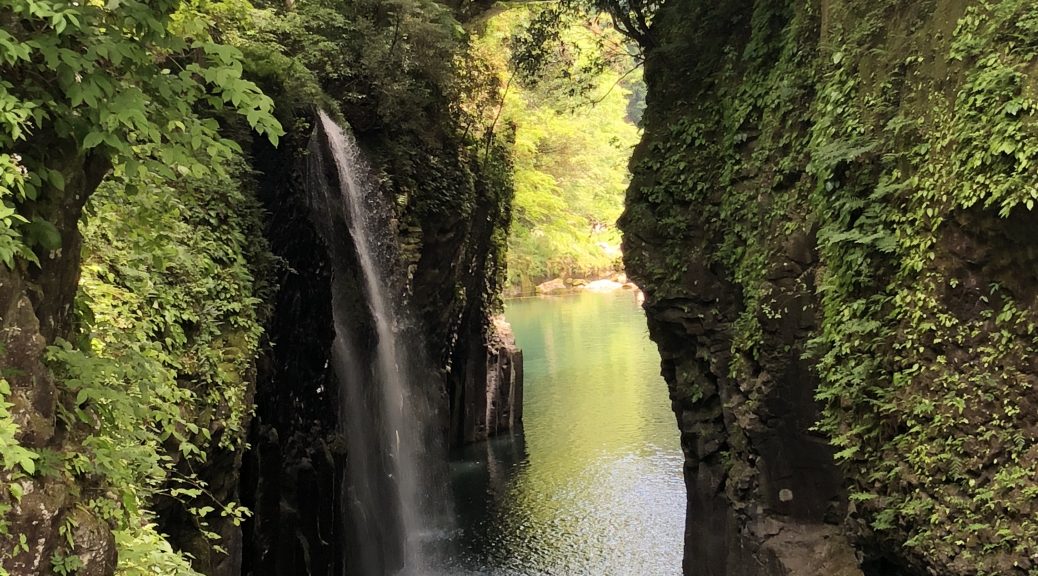
After lunch in nearby road station, parked car at the base of the gorge after some tight elbow turns with sharp drops. Followed a trail along the narrow gorge for about 1 km. (boat rowing was closed on the day we visited).
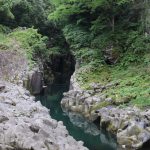
The gorge was formed by a river cutting through sheer cliffs, which was formed from volcanic rocks slowly solidifying while flowing into twisted columns and pillars.
The Manai-no-taki (真名井の滝) splashing into the river against a backdrop of lush green and turquoise water reflections was captivating.
Along the trail, there were points where the river was cutting deep and large potholes at the base of the cliffs. As the trail was meandering uphill, we caught sight of 3 bridges crossing the gorge at different elevations. We turned back when we reached the road junction from where we had earlier driven across. The entire walk took about 1 hour and was fairly easy.
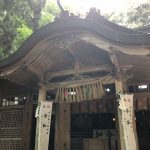
Takachiho Jinja (高千穂神社)
Before heading to our onsen hotel in Mt Aso, we dropped by this Jinja at the entrance to the gorge.
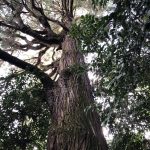
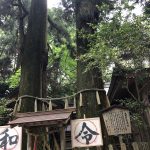
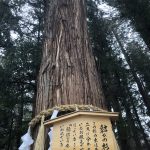
The Jinja was surrounded by tall and old Japanese-Sugi (Cedar) trees. One of them was 800 years old and a “husband-and-wife Sugi” where its bases have merged together.
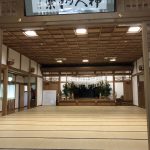
On the side of the Jinja there was a Yokagura hall where a show is performed every night.
Visited northern Kyushu in mid-May for 12 days – beginning of the Reiwa-era. It’s our 6th visit in Kyushu and 4th time driving in Kyushu. The main goal was to visit rural landscapes in Mt Aso for new lush green, blooming of Miyama-Kirishima (mountain azaleas) and other Spring flowers from mid-May.
After landing in Fukuoka, took Kyushu Shinkansen to Kumamoto direct in less than 1 hour.
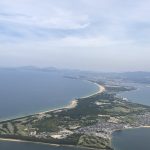
Aerial views before landing in Fukuoka
Uminonakamichi Flower Park
Shinkansen trains aerial view
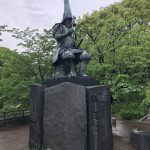
As the Kumamoto Castle has been under major repair since the earthquake in 2016, we dropped by the visitor centre and outer rim where access was permitted. A partial re-opening has been scheduled in October 2019.
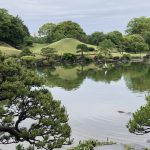
Suizenji Jojuen (水前寺成趣園)
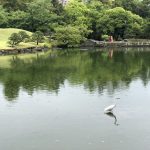
It was an easy stroll in the beautiful landscape garden. A graceful white crane was in the pond and it became the subject of many shots, apart from reflections.
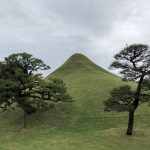
Worthy to mention is the mini-Mt Fuji in lush green 🙂
Dinner in local izakaya serving fresh seafood from Amakusa. We did not order Sakura-niku (horse sashimi) which is a local specialty.
From Tokyo we took Tohoku Shinkansen and alight at Koriyama station in Fukushima Prefecture. Picked up rental car and visited Miharu Takizakura and Nihonmatsu in a day.
Miharu Takizakura (三春滝桜)
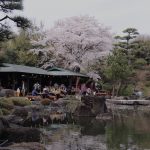
It took less than 30min to arrive at the huge parking lot (free), via national roads in light traffic. A top 100 sakura spot and one of three most famous sakura trees in Japan. It is a Benishidare-zakura (ベニシダレザクラ) belonging to the Edohigan (エドヒガン) family.
It was estimated to be more than 1000 years old, at a height of 13m+ and span over 25m. Taki in Japanese means waterfall and indeed it looks so.
Though it was crowded, everything was in good order. We stayed for an hour and on the way back to the parking lot bought some Okashi (sweets) and somen (noodles) made of sakura ingredients.
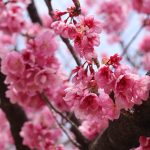
closeup
stone inscription re Miharu Takizakura
Okashi that we bought
colourful car at the entrance
Uchidenosakura (内出のサクラ)
Next we headed north to Nihonmatsu in less than 30km away. Dropped by this Uchidenosakura, of 220 years old, at a height of 19m. It belongs to a rare variety of Ubahiganzakura.
There were no other visitor when we arrived. Stayed for about 15 min.
Nihonmatsu Kasumigajo Park (霞ヶ城公園)
arrived at the final top 100 sakura spot of this trip – Kasumigajo in Nihonmatsu city. Had lunch in local restaurant serving lunch sets opposite to park.
It’s famous for its 2500 sakura trees – akin to a sakura forest when viewed from a distance. Luckily they were in full bloom.
entrance
Rengeji Shidarezakura (蓮華寺 シダレザクラ)
There is a small visitor centre in the parking lot of Kasumigajo. The friendly lady handed some printed info on nearby sakura trees. So on the way back to Koriyama we dropped by this temple for this Shidarezakura of 300 years old, also belonging to the Edohigan family.
Dinner in Komakata Dozeu (駒形どぜう)
Upon returning to Tokyo/Ueno by Shinkansen, headed to nearby Asakusa for this 200-year old shop (from Edo era) serving Dozeu (pond loach). While seats were on the floor (by tradition) on 1F, we preferred table seats and were led downstairs, where there were more diners.
We ordered 2 portions of どぜうさきなべ (dozeu stripped of bones). The dozeu were served on nabe (heated plate on charcoal). On the side came plenty of chopped spring onions. It was delicious with spices like Sansho to serve with rice, while lighter than Unagi (river eel). On top I ordered a dozeu-jiru (soup) to try, it was quite thick.
Though whale meat (くじら) is on the menu, we always avoid it.
seats on the floor on 1F
Dozeu-jiru (soup)
cold tofu – ordered on top
On the next day we returned home in Hong Kong. That was the end of another fabulous sakura trip 🙂
From Tokyo, went for a day trip in Gunma Prefecture for sakura. Took Joetsu Shinkansen and arrived at Maebashi via Takasaki. Bought a (temporary) retro bus day pass to Akagi Senbon zakura and Gunma Flower Park. Took about 50 min to arrive at former.
Akagi Senbon zakura (赤城南面千本桜)
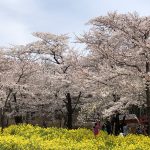
Another top 100 sakura spot in southern Mt Akagi with thousand sakura trees.
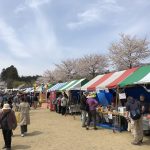
When we arrived it was almost 11am and crowded as expected (on Sunday). The sakura tunnel was more than 1km and on either side there were plenty of food stalls. In an open area there were fields of rapeseed flowers which was photogenic. Stayed for about 30 min and took retro bus to next stop.
Gunma Flower Park
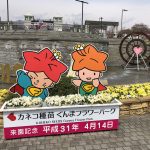
A fairly large flower park in southern Mt Akagi. Entrance fee of JPY700 was included in the bus pass. Not crowded.
Apart from tulips, there were some late sakura bloomers including the pink Yaebeni-Shidarezakura and a rare reddish Yohohamahizakura (ヨコハマヒザクラ).
Entrance
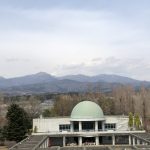
Mt Akagi to the north
Had soba noodles for lunch inside a Japanese landscape garden. Returned to Tokyo afterwards.
Japanese landscape garden
pinkish-red Yohohamahizakura
Yaebeni-shidarezakura
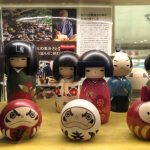
Wooden characters inside JR Takasaki station
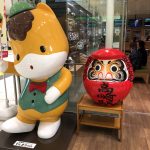
Gunma-chen and Daruma
Daruma
dragon ball heros and Ninja
4 famous onsen in Gunma Prefecture – Ikaho, Shima, Kusatsu, Minakami
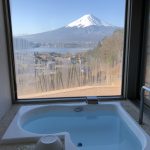
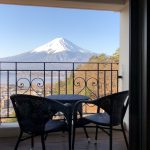
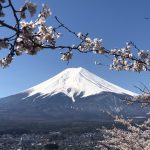
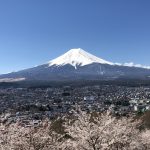
On next morning it was a sunny day with Mt Fuji showing up over Kawaguchi-ko :))
viewed from balcony
viewed from heart-shaped ensuite bath
Arakurayama Sengen Park (新倉山浅間公園)
Checked out hotel after quick early breakfast and drove to parking lot. As it was a Saturday the closest parking lot at base was full (at 8am+) and were told to park in another lot (about 2km away) and change free shuttle bus (or on foot).
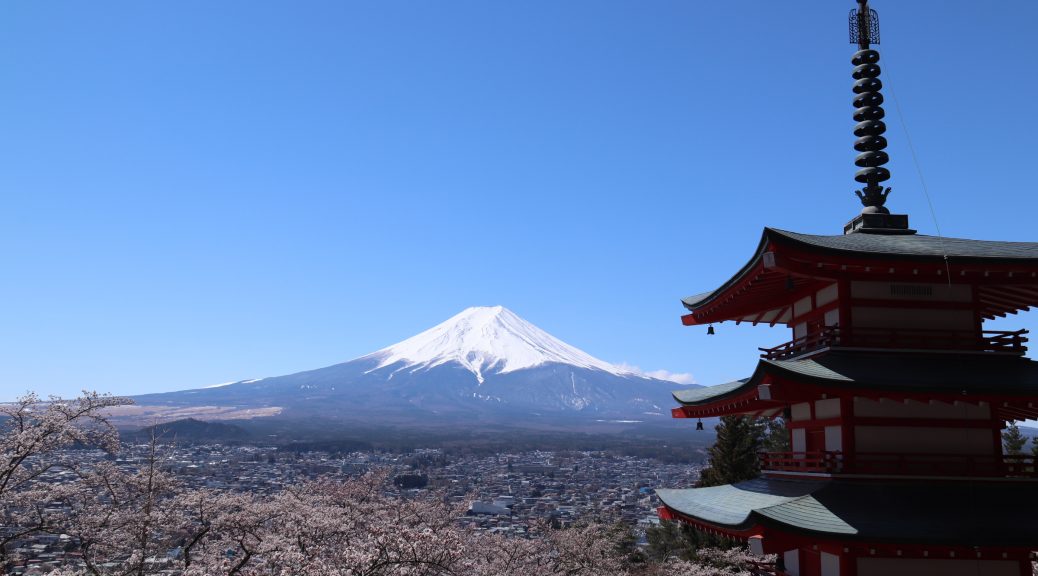
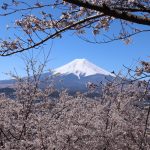
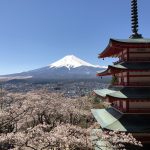
Despite long (but orderly) line for shuttle bus we finally arrived at the Sengen Park (after climbing almost 400 stairs) at 9am+. Ultimately, our efforts were rewarded with sakura in full bloom, with blue sky and Mt Fuji as backdrop.
Chureito Pagoda
Had to line up for 75 min but worthy – sakura in full blossom + Mt Fuji + blue sky
local residence along the way to shuttle bus
Kawaguchi-ko
Back to the photogenic spot for Mt Fuji over Kawaguchi-ko. Sakura was around 10-30% along the northern lake rim wheras those along the food stalls were around 50-70%. Overall, it was much better than 2 years ago and we were grateful 🙂
Ume
After lunch, returned car in Otsuki and took JR express train back to Shinjuku in 1 hour.
Had dinner in one of our fav izakayas and most fav sake. Stayed in Tokyo for the next 3 nights.
Hakone was a plan B in case of poor weather – unfortunately it had to be executed again as another low depression system was rolling into Kanto region overnight after our arrival in Fuji 5-lake.
Snow was falling again in the morning when I started driving, getting heavier when crossing the mountain roads into Hakone Jinja via Hakone Sengokuhara.
Clouds covering Mt Fuji – viewed from hotel room
Mt Fuji had disappeared – snowing on the next morning
snowing in Hakone
Hakone Jinja
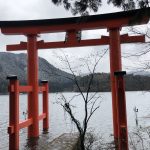
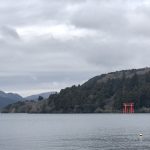
By the time when we arrived at Hakone Jinja, snow had turned into rain. Also dropped by the Torri gate along the lake rim.
Torii gate at the lake rim of Ashino-ko
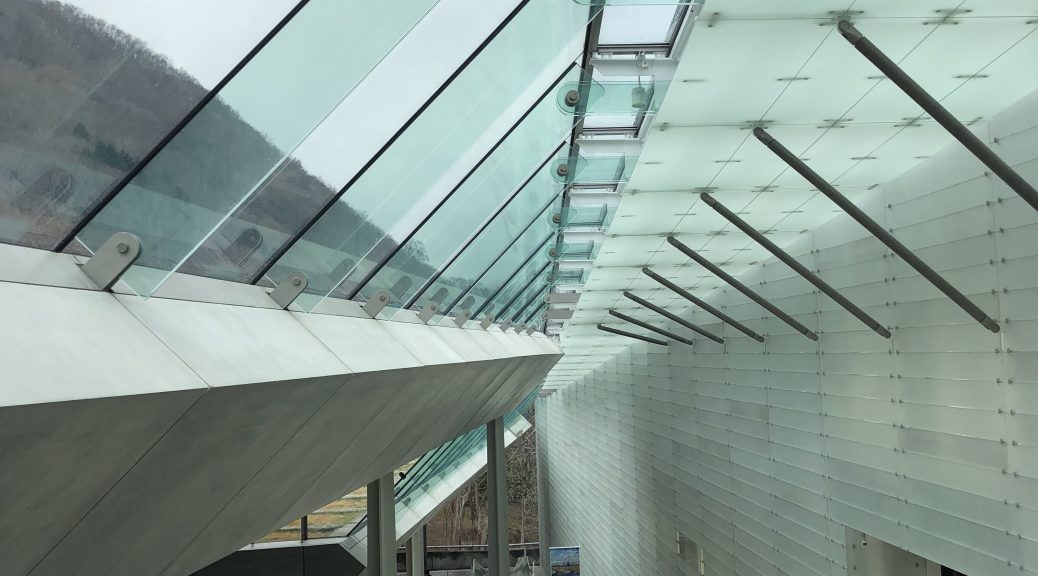
Pola Museum of Art
Had a nice lunch inside its western restaurant for European cuisine, before visiting its nice collection of Impressionist paintings. Stayed for around 3 hours. During return drive, dropped by a fishing lake in Gotemba where Somei Yoshino sakura was in full bloom, though Mt Fuji was totally hidden behind clouds.
entrance
western restaurant facing an outdoor terrace
lunch
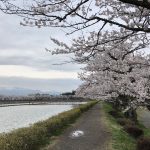
Somei Yoshino sakura along fishing lake
Chosen western dinner course for 2 nights in onsen hotel in Kawaguchi-ko
2nd visit since 2017 when sakura started blooming when we visited 2 years ago.
Though I had timed my visit (in this season) based on the local sakura forecast in early March, it was a few days – probably 3 to 4 days prior to full bloom.
Checked out from onsen hotel in Suwa-ko and headed to Takato Castle by car. It was a sunny day (after the low depression system had moved away), though with snow on roadside.
After about 30min we arrived at a dyke in Ina city – 六道の堤 . It was grateful to be back after 2 years with sakura in bloom 🙂
Finally, in another 20min arrived at the Takato Castle at around 10am. The closest parking lot was almost full. Loads of tourists were subsequently ferried in by tour buses after our arrival.
There were 1500 sakura trees of Takato-Okohiganzakura (タカトオコヒガンザクラ). A top 100 sakura spot. In the featured photo was the famous Ounkyo (桜雲橋) – literally Sakura cloud bridge, at around 30-50%. Due to snow, entry was forbidden beneath the Ounkyo.
Takato-kaku at the northern gate
新城藤原神社 Shinjou-Fujiwara Jinja
桜雲橋 Ounkyo – literally sakura cloud bridge
太古櫓 Taiko-yakura
To our surprise, the sakura outside the southern gate were almost at full bloom, as reported on its website. And there was a sakura tunnel beneath the Takato Arts Museum.
sakura tunnel outside Takato Arts Museum
Sculptures outside Takato Arts Museum
Though there were other famous sakura spots and trees around the Castle Park, most were less than 50%. Sticking to my original plan, we headed to Fuji 5-lake. Picked up a car in Kofu. Dropped by Takeda Jinja before heading to onsen hotel in Kawaguchi-ko.
Takeda Jinja (武田神社)
Sakura had passed peak and petals were falling inside the Jinja, though the sakura boulevard in front of the entrance looked gorgeous from a distance.
Matsumoto Castle and Takato Castle Ruins Park by car from Suwa-ko.
Arakurayama Sengen Park and Kawaguchi-ko by car
Akagi Senbon-zakura, Miharu-Takizakura, Nihonmatsu as day trips from Tokyo.
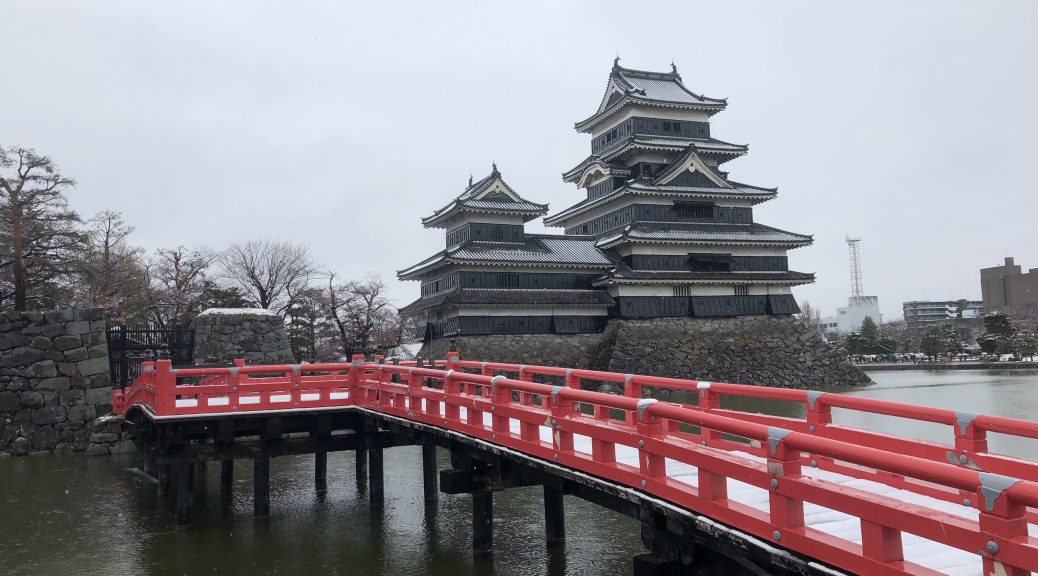
Matsumoto Castle
Right after landing in Tokyo/HND, headed to Suwa-ko by JR express train via Shinjuku. Prior to our arrival, snow was forecasted in Nagano Prefecture, apart from Tohoku etc on that night. Indeed, it had been snowing the entire night and on the next morning, the lake rim was covered in snow.
The Matsumoto Castle was not in my original plan. Due to sunny day being forecasted on the next day, decided to postpone the Takato Castle Ruins Park till then.
Visited the former after picking up car from Suwa-ko and drove very carefully – less than 50km/h and kept longer distance away from vehicles ahead. It took about 1 hour while snowing along the way.
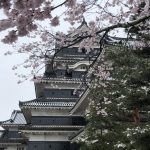
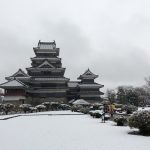
Luckily some sakura trees were already in full bloom inside the castle park, including Shidare-zakura (weeping sakura) trees. While this was our 3rd visit to this castle, it was the first time when it was covered in snow – together with sakura 🙂
views from castle
Apart from sakura, Ume (plum) flowers too were covered in snow.
It’s good to have warm soba noodles for lunch after leaving the castle park when temperature was around 1-2C.
Snowfall had stopped and on our way back we dropped by the Harumiya (Spring Shrine) – one of two Shimosha and nearby Manji stone buddha in Shimosuwa town.
ps. visited the Akimiya (Autumn Shrine), the other Shimosha 2 years ago in another sakura trip.
Had a coffee break with nice macha (green tea) roll cake in a small local cafe – we were the only customers. Headed back to onsen hotel and dropped by one of my fav local sake brewery – Masumi (真澄) from Suwa. Though sake tasting was offered, had to pass due to driving.
Masumi sake brewery
Stayed in a 100-year old onsen hotel on the lakeside. Ordered Masumi (sake) for 2 nights during Kaiseki dinner 🙂